
Published on 15 January 2024
Start-up Camps
Start-up Camps, powered by Innosuisse and managed by Swissnex, provide a springboard for Swiss start-ups with exceptional international potential. With full immersion and personalised support from local teams, you can speed up the exploration and validation process for your start-up abroad and gain a foothold in international markets – propelling you to the forefront of the global stage.
Market Validation Camps

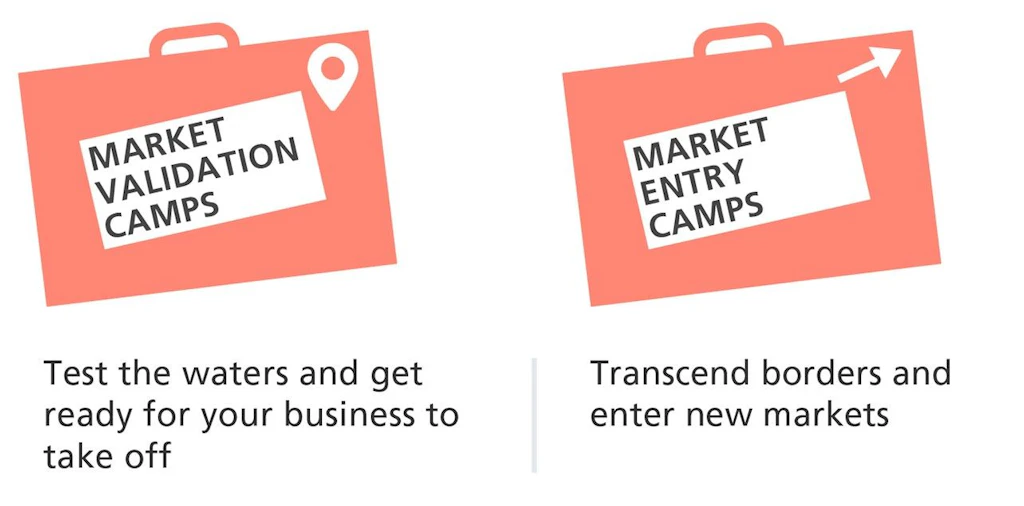
Market Validation Camps give you the opportunity to get to know your chosen target market in person, test your business idea on site, chat with local teams of experts and then develop a tailored market-entry strategy. They are powered by Innosuisse and managed by Swissnex.
To take part in a Market Validation Camp, your start-up must be innovative and fulfil the following criteria:
- You have global ambitions and the potential to create added value for Switzerland
- You can prove than you fulfil all the conditions needed to successfully enter your chosen target market
- You are enrolled in Innosuisse Start-up Coaching (Initial, Core or Scale-up Coaching) or you have been awarded the Innosuisse Certificate within the past three years
- A customised programme providing total immersion in the target market over a maximum of four weeks
- The opportunity to validate and test your product, service or business model in the local market
- Scouting services and targeted introductions to potential customers, authorities and business partners
- Mentoring on internationalisation and continuous guidance
- Office and meeting room with on-site support
- Grant to cover part of your travel expenses
Start-ups that are already enrolled in Innosuisse Start-up Coaching need to select their preferred camp location and then contact the camp organisers directly.
Start-ups that are not yet enrolled in Start-up Coaching need to sign up first.
Here you can find a list of coaches who can help you get ready to take part in a camp.
Market Entry Camps

Market Entry Camps are designed to kick-start the expansion of your start-up and accelerate your entry into a new market, providing your start-up with a springboard to succeed in a foreign country. They are powered by Innosuisse and managed by Swissnex.
To take part in a Market Entry Camp, your start-up must be innovative and fulfil the following criteria:
- You have already validated your business idea in the target market
- You have the ambition to enter your chosen market and the potential to create added value for Switzerland
- You are enrolled in Innosuisse Start-up Coaching (Initial, Core or Scale-up Coaching) or you have been awarded the Innosuisse Certificate within the past three years
- Customised programme providing accelerated access to your chosen market over a maximum of three months
- Office and meeting room with on-site support
- Scouting services and targeted introduction to potential customers, authorities and business partners
- Grant to cover part of your travel expenses
Start-ups that are already enrolled in Innosuisse Start-up Coaching need to select their preferred camp location and then contact the local organisers directly.
Start-ups that are not yet enrolled in Start-up Coaching need to sign up first.
Here you can find a list of coaches who can help you get ready to take part in a camp.
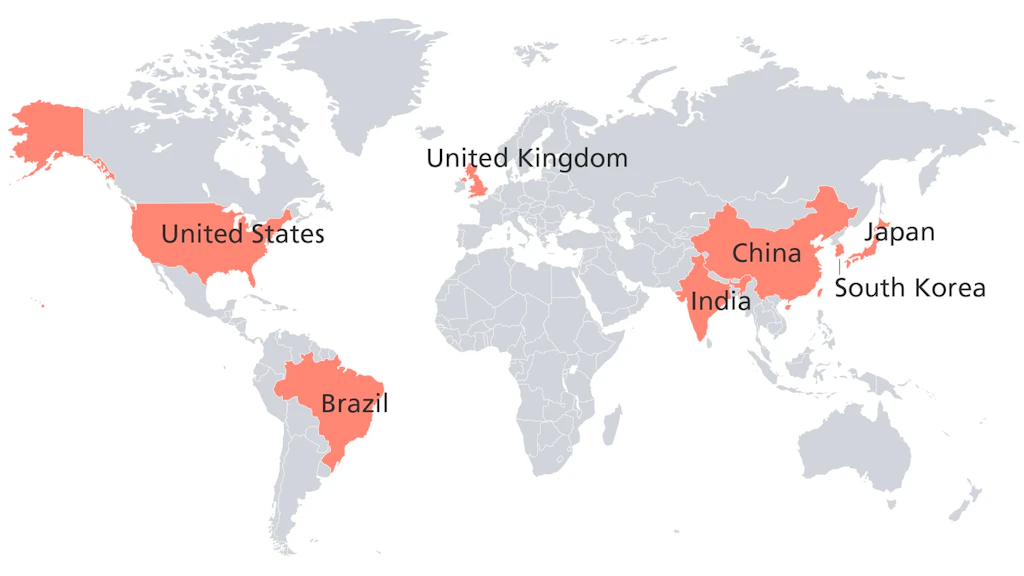
Where do you want to gain a foothold?
Brazil
Market validation and entry
Start-ups can conduct market research to validate business hypothesis, identify potential customers and partners, confirm that Brazil is a worthwhile market, and prepare and implement entry strategies.
Network
Start-ups have access to a network of experts and mentors specialising in science, technology and doing business in Brazil. In addition, start-ups are connected with local organisations, research institutes, can participate in trade shows and can take advantage of co-working spaces in Rio de Janeiro and São Paulo.
Product validation
Start-ups have the opportunity to validate their product or service in a highly adaptive and diverse market of over 200 million inhabitants. Swiss technologies are well received throughout the country, but it is essential to bridge the Brazilian business culture, language, regulatory, and legal system. In collaboration with partner organisations in various verticals, the start-up is put on a highway to market validation, thereby saving costs and time.
Follow-up
Stable, long-term relationships are key to ensuring the success of a business, with interpersonal connections being particularly highly valued in Brazil. Swissnex in Brazil maintains contact with the start-up and its stakeholders after the camp ends and represents the start-up’s mission in Brazil, e.g. through events or a communication campaign.
Why expand into Brazil?
Brazil is a market of over 215 million people and has a long history of being among the twelve largest economies in the world. The country has the strongest economy and the most prominent start-up and innovation ecosystem in Latin America.
What’s the Brazilian market like?
The Brazilian population and its organisations are fond of all technologies, but the tropical country shows some characteristics that favour specific industry verticals. The Brazilian is an early adopter and a strong consumer on all income levels and, as e-commerce grows, so does the need for new platform or service technologies, along with the infrastructure, logistics and financial expertise needed to support and optimise the consumer market.
Besides its large market size, Brazil has a mixed healthcare system with both public and private healthcare providers. As the population in Brazil continues to grow and age, there is an increasing demand for healthcare services. Additionally, the rise of chronic diseases such as diabetes and hypertension is also driving demand for innovative solutions. The country has a favourable regulatory environment and a thriving startup ecosystem, with a growing number of incubators, accelerators and venture capital firms focused on healthcare.
The food sector industry, a sector that accounts for a large share of the country’s GDP, continues to grow and the aim for technologies that support and facilitate sustainable food systems is latent. Brazilians are reducing their consumption of animal protein, but finding alternatives is still difficult. Agricultural products represent a large share of exports to China, the United States, Argentina and the European Union.
Brazil is also likely to become a key player in the energy transition and bioeconomy. It already has one of the cleanest energy mixes worldwide, with almost 50% of its energy coming from renewable sources. Its abundant, renewable energy sources include hydro, biomass, wind and solar, and Brazil is expected to become one of the world’s largest green hydrogen producers.
What is the state of innovation?
Brazil is an emerging country that is rapidly gaining maturity in innovation and open innovation. This trend can be observed in the steadily growing number of accelerators, incubators, investors, innovation centres, R&D centres and co-working spaces. The openness of the corporate sector is also a highlight; many corporations in Brazil have innovation areas focused on trend scouting and establishing partnerships with start-ups in order to start innovation projects. In addition, the corporate venture sector is growing and open to investing in international start-ups that can solve innovation challenges in Brazil.
How easy is it to find qualified employees and partners?
Brazil has seen an unprecedented expansion of university education and technical training opportunities over the past 20 years, thanks to new legislation and public and private investment in training. Access to higher education is now a given, and this development has improved the quality of the workforce. At the same time, Brazilians are investing in continuing education to improve their careers. Nevertheless, the market shows increasing demand for highly qualified professionals, and foreign language skills still need to be improved.
What are the advantages of Brazil?
Brazilians are very open minded. They like trying out new technologies and getting the latest models of products. They lead in daily time spent on the Internet and are very active on social networks. The Brazilian social and cultural identity is rooted in the Americas, Europe and Africa, which makes the business environment easier and the cultural gap smaller for Swiss entrepreneurs.
What opportunities do Rio de Janeiro and São Paulo offer?
Rio de Janeiro and São Paulo are the largest cities in Brazil and offer a wide range of opportunities. Rio de Janeiro has R&D technology parks affiliated with top universities in areas such as biotechnology, engineering, computer science, oil and gas, renewable energy and the creative economy, among others. São Paulo is the financial heart and industrial powerhouse of the country. The State of São Paulo is home to the highest concentration of start-ups. Most of them are developing technologies in the areas of biotechnology, big data, artificial intelligence and machine learning, with a focus on market segments such as health and agribusiness. The world’s most innovative companies have offices in São Paulo, which improves the conditions for market innovation and traction, hiring of skilled labour and investments. Alongside these traditionally strong geographic locations, Brazil counts many examples of up and coming, rapidly evolving innovation ecosystems in the south, north-east, and north of the continental country.
What are the challenges?
Bureaucracy is one of the main challenges that entrepreneurs face in Brazil. This wastes time and money for businesses and is compounded by high local and federal taxes. Despite the impressive variety and quantity of data collected, the ability to use it is limited due to the lack of structured databases. In addition, language can be a barrier to accessing information and data from public institutions, as such resources are mainly in Portuguese. These conditions and other aspects of the Brazilian business culture make it necessary to have contacts with reliable and trustworthy local partners in order to enter the market.
China
Tailored support
China’s huge economy is driven by a highly competitive and fast-moving market. It can offer boundless opportunities, but the inherent challenges to market entry remain daunting to foreign start-ups with limited or no local experience. By providing individualized, one-to-one support, the camp continuously guides Swiss start-ups towards achieving their goals in China at every step of their market internationalization journey. Camp participants can sharpen their business plan by gaining a thorough understanding of local market conditions and the regulatory framework based on knowledge exchange with industry experts, potential clients, and partners.
Network & matchmaking
As an official representation of Switzerland, Swissnex in China has developed a broad, diverse network of industry, academia, and policy actors over the course of 15 years, which helps open doors for new opportunities and offer first-hand insights. The close collaboration with the Swiss Embassy, Consulates General, SwissCham, and other local partners also help start-ups tap into China’s top innovation clusters across its vast geography.
Cultural bridge
Cultural and linguistic barriers are often cited as major hurdles to doing business in China. The camp manager can accompany the start-up entrepreneurs in-person at business meetings to help them effectively navigate these communication gaps and establish trusting relationships with local partners.
Why expand into China?
As the world’s second-largest economy, China is a key market for startups that want to scale rapidly. China stands out for its blend of high-quality production and advanced technological infrastructure, which allows innovators to bring ideas to life rapidly and cost-effectively. The country’s fast-paced environment and tech-savvy population create an ideal setting for innovation. Swiss startups, with their strong scientific foundations, are well-positioned to take advantage of China’s deeptech focus and its supportive policies for advanced technologies.
What’s the situation like in China?
China’s transition from the world’s manufacturing hub into a major tech hotbed has been spurred on by an adaptive domestic market in which competition drives success. An entrepreneurial, «try fast and fail fast» mindset has embedded itself in the start-up culture, where the rapid product iteration capabilities often lead to fast maturation and scaling. Companies operating in China need to be extremely agile to stay competitive in the market, adapting quickly to shifts in market demand and new preferential policies. At the top, the government sees its rapidly growing digital economy as the next global economic paradigm, placing significant emphasis on data governance, ICT infrastructure and digital industrialisation.
What is the state of innovation?
China is prominently featured in global innovation rankings, with its Shenzhen-Hong Kong-Guangzhou, Beijing and Shanghai clusters ranking among the world’s top science and technology hubs. Over 500 Swiss companies are established in the Shanghai area, many of them investing heavily in R&D, which reflects a strong presence of the Swiss business community in this innovation ecosystem. China’s R&D investment prioritises basic research and technology applications in fields like next-gen information technology, biotech, new materials and cleantech as key drivers of economic growth.
How easy is it to find qualified employees and partners?
China boasts a large, well-educated talent pool, with the first-tier cities offering a steady supply of highly skilled, bilingual and multilingual talents possessing both local knowledge and international experience. However, locating, attracting and retaining the right employees can take time and effort. Start-ups could consider recruiting from the community of Swiss university alumni, who are natural cultural translators. Likewise, qualified partners are readily available in China, but carrying out due diligence and evaluation can be challenging and time-consuming.
What are the challenges?
Navigating China’s vast and complex market requires careful preparation. The complex business regulations and bureaucracy can be costly in terms of both time and resources, while IP concerns impose potential obstacles for foreign startups looking to make inroads into Asia’s biggest economy. To successfully navigate the challenges of entering China’s market, startups need a trusted, neutral partner like Swissnex, which prioritises their interests and offers valuable cultural translation and local expertise. Swissnex helps balance the risks and opportunities inherent in the Chinese business environment, ensuring that start-ups can confidently tap into the country’s vast potential.
India
Market entry
Swiss businesses find internationalisation challenging when it comes to India given that it is a country of many different nuances. The Innosuisse camp helps them understand the business culture, analyse the market, strategize go-to-market approaches and build business models based on potential customer feedback.
A two-step entry process via market validation and entry camps is offered. This helps businesses understand what it would take to enter India as a market via the validation camp and make a go or no-go decision. An entry camp accelerates growth by putting a start-up in front of first potential customers and partners and assists it in acquiring or hiring the right skills on the ground.
Network
Tailored individual support is provided. This includes connections for knowledge exchange and potential first customers or partners that are relevant for the start-up business.
Product validation
The incredible diversity, market size and business approaches in India are both a challenge and an opportunity. Whether it is a test market for novel technologies, a tech co-developer or a market itself, India has something to offer to start-ups looking to explore a new market. However, no business entity can airdrop solutions and hope for similar results across all markets - understanding local conditions is a must. Swissnex in India is a trusted partner with a deep understanding of the country’s market. Since 2013, over 60 Swiss start-ups have been mentored through different programmes that explore market discovery, market validation and market entry in India.
Follow-up
Long term vision and relationships are essential for businesses to succeed. Swissnex in India helps cement relationships after the camp ends.
Why expand into India?
India is a vibrant and dynamic destination for Swiss start-ups, offering various opportunities. With its cost-effective environment, abundant English-speaking talent and its vast, diverse market, India is becoming the world’s most populous nation. This immense population fuels a consumer-driven market, while Swiss expertise in deep tech complements India’s focus on solving large-scale, real-world challenges, creating a synergy for collaboration.
Global corporations have established Centres of Excellence in India, leveraging its innovative business strategies and meticulous market approach. These successes in India often serve as blueprints for scaling operations in other markets worldwide.
What is the Indian market like?
India offers a dynamic, inclusive and informal entrepreneurial ecosystem where trust, cost-effectiveness and reliability are the cornerstones of business partnerships. Thriving in India requires patient capital, a local presence and a long-term commitment to building relationships. These investments often result in enduring success.
What is the state of innovation?
India has rapidly transformed itself from outsourcing hub to global leader in innovation, particularly in research and development (R&D). There are a lot of R&D centres in fields such as engineering, computer science, basic and applied sciences, and aerospace. Bengaluru, the «Silicon Valley of India», is a prime hub for industries like ICT, medical technology, clean technology, biotech, healthcare, design and gastronomy, presenting boundless opportunities for collaboration.
How easy is it to find talent and partners?
India’s vast talent pool combines global expertise with cost advantages. The country is home to world-renowned universities and specialist management and technology institutions. The start-up ecosystem is equally supportive, boasting investors, mentors, incubators, accelerators and venture capitalists eager to share their insights and resources. International companies benefit from this collaborative environment, which helps them target global markets.
What are India’s advantages?
With its increasing purchasing power, India’s large urban middle class presents a lucrative growth market. The country’s metropolitan hubs – Bengaluru, Delhi and Mumbai – are globally connected and rank among the world’s top start-up ecosystems. Coupled with its abundant English-speaking talent and innovative spirit, India offers a compelling environment for Swiss start-ups.
What are the challenges?
India’s diverse market requires an open-minded and relationship-driven approach. Building trust and understanding the nuances of the local market are essential for success. Companies that successfully navigate the Indian market often emerge stronger, equipped with the skills and insights to excel in other global markets.
India is not just a market; it is a launchpad for innovation and global success. For Swiss start-ups ready to embrace its complexities and opportunities, India promises immense rewards.
Japan
Cultural bridge
Throughout their stay, start-ups receive support from a local team that is familiar with both Swiss and Japanese cultures. They provide support with preparing for the camp and help to develop awareness of cultural differences.
Network of local experts and talent
The local team provides networking and introduction services, enabling start-ups to meet the most relevant potential business partners in Japan, such as tech firms, corporate venture, open innovation consortia and accelerators. Introductions made by Swissnex in Japan opens doors for dialogue.
Follow-up
A long-term relationship is key to establishing trust and to business development in Japan. This is why support is provided beyond the end of the camp to help consolidate business activities and cement relationships.
Why expand into Japan?
Japan is one of the largest economies in the world. Over recent years, the government has been continually stepping up its efforts to attract start-ups and entrepreneurial talent from abroad. Its great credibility can be used as a springboard to achieve growth in areas such as Biotech & Medtech, Cleantech and Robotics & Manufacturing.
What’s the Japanese market like?
At first glance, the Japanese market appears self-contained and hard to penetrate. With the right partners, however, this complex and sophisticated market can prove a lucrative opportunity and an exciting place to forge R&D partnerships. Successful operations generally lead to long-term partnerships.
What is the state of innovation?
Japan is committed to remaining at the cutting edge of innovation in order to maintain its economic dynamism and improve quality of life. To achieve these goals, the private sector, academia and the government have launched initiatives to support start-ups and talented young entrepreneurs from Japan and abroad.
How easy is it to find qualified employees and partners?
Japan’s education system is of a very high standard. The recruitment pool of qualified workers is ideal for Swiss start-ups wishing to establish a local subsidiary. Engineers, scientists, doctors and manufacturers are all guaranteed to be of world-class quality. The Japanese are very keen to learn about international business cultures and can easily adapt to new technological developments.
What are the advantages of Japan?
Like Switzerland, Japan enjoys a good quality of life and high standards. In 2009, Switzerland concluded a Free Trade Agreement (FTA) and an Economic Partnership Agreement (EPA) with Japan, underlining the strong economic ties between the two countries. Patents and trademarks are also respected in Japan, which has one of the highest literacy rates and is among the most technologically advanced countries in the world. New trends and technologies are constantly emerging, highlighting the curiosity of the Japanese people.
What opportunities does Japan offer?
Opportunities include a huge domestic market, which expects high standards and looks for trusted partners for long-term collaboration. Commercial success in Japan can provide a platform for further expansion in Asia.
What are the challenges?
Foreign start-ups may have to overcome challenges such as language, corporate culture and psychological barriers. However, these can easily be overcome with the right partner.
South Korea
Market entry
Assisted by mentors, start-ups validate and optimise their business strategy to accelerate their entry into the South Korean market. Mentors include government officials, IP professionals, accelerators and investors.
Network
In South Korea, finding the right connections and partners is challenging and time-consuming. The camp overcomes this barrier by providing personalised access to the local entrepreneurial network. In Asian society, which is very hierarchical, connections facilitated through governmental organisations are particularly valued.
Product validation
Business practices and entry regulations in Asian markets differ from European markets. Local connections propel the product adoption and create opportunities for partnerships, trials and pilot tests.
Follow-up
After the camp, follow-up is guaranteed by the Science and Technology Office in Seoul part of the Swissnex network. Support for international projects between Switzerland and South Korea is encouraged, and follow-up with the right partners is ensured.
Why expand into South Korea?
South Korea is one of the most developed countries in Asia. It is a fast-growing and dynamic country, boasting one of the fastest economic developments in history. Deeply rooted by a strong commitment to research and development , South Korea has evolved to a global benchmark for innovation an ideal partner for bilateral R&D cooperation and a prime destination for Swiss start-ups.
What to expect on site?
South Korea’s history and rapid development reveal its dynamic and business-oriented culture. South Korean companies and organisations are open to taking risks. In addition to funding opportunities, a Swiss start-up arriving in South Korea finds a market of more than 50 million people seeking for the latest trends in technology. You can count on fast feedback and exchange, expert R&D partners and high-quality manufacturing. Due to its location, South Korea is also an ideal distribution centre for the whole of East Asia.
What is the state of innovation?
South Korea is recognised for its leadership in the field of information and communication technology (ICT). The high penetration of ICT has also disrupted traditional services and sectors. New technologies in education, for example, are booming. On the other hand, Korea has an incredible infrastructure, culture, and penetration of VR and AR games and technologies. Government policy encourages deep tech and digital health development, so South Korea offers an excellent infrastructure for testing new products and innovative services on a wide range of patients. Foreign companies are welcome to join the smart hospital cluster and can collaborate on the use of the 5G network, AI, AR and robotics. Other areas of interest are beauty, nutrition and sustainability.
How easy is it to find qualified employees and partners?
South Korea’s education system is very competitive. An extremely difficult selection process provides access to the best higher education institutions, which is crucial for future career development. The recruitment of high-level workers is possible and is ideal for Swiss start-ups who wish to establish a local subsidiary. Engineers, scientists, ICT experts, doctors and manufacturers are the most sought after and competition for jobs is strong. However, South Koreans are keen to work for foreign companies, especially Western ones, and to learn about international business cultures.
What are the advantages of South Korea?
With their brand image, products from South Korea easily penetrate markets in Asia and the Middle East, making the country a perfect hub for further expansion. Openness and curiosity about international products and opportunities characterise South Koreans, who are quick to learn and adopt new trends. In one of the safest countries in the world, it is possible to recruit highly qualified and trusted employees and gain access to manufacturing expertise. Finally, this business and investment-oriented culture opens the door to financing opportunities, frank and rapid feedback, and cooperation.
What opportunities does Seoul offer?
The capital of South Korea is home to nearly 30’000 start-ups. This geographic concentration plays an important role in the early phases of networking and later during follow-up, making the process very efficient and facilitating connections with key decision makers and organisations.
What are the challenges?
The business cultures in Asia differ from Europe. It is thus crucial to be aware of this into account when engaging in dialogue with Korean counterparts. Language barriers can also be discouraging at first when discovering a new context. Geographic distance can also make connections slower and require constant monitoring.
United Kingdom
Opportunity
Start-ups have the opportunity to gain first-hand insights into business opportunities in the UK by participating in customised activities and events. During their stay in London, start-ups can enjoy working from the Trampery (Shoreditch), and exchange knowledge and experience with fellow entrepreneurs, arrange business meetings or simply enjoy a cup of tea.
Support
Getting the support from the Swissnex team based at the Embassy of Switzerland in the UK will help start-ups to either explore, or properly enter the local market. Depending on the start-up needs, meetings with mentors, potential partners or customers will be organised.
Expertise
Swiss entrepreneurs can also benefit from the experience and expertise of the Embassy team to guide them in every step of their internationalisation.
Flexibility
As the UK is near to Switzerland, the programme can be spread over several separate weeks depending on the availability of the entrepreneurs.
Why expand into the UK?
The UK has a large consumer and business-to-business market with key strengths in many high-tech sectors. It has a world-leading scientific foundation and a strong investment and financial services sector. London is the business capital of Europe and many of the world’s largest companies have their headquarters on the banks of the Thames. All of these factors make the UK an extremely attractive market for Swiss start-ups looking to grow their business in English-speaking countries.
What’s the situation like in the UK?
Despite Brexit, the UK is still an attractive location for international start-ups. It benefits from a dynamic corporate culture and welcomes international companies. Close intercontinental ties with the US and Commonwealth countries make the UK an ideal springboard for business opportunities beyond Europe. Culturally speaking, the UK is a risk-friendly country when it comes to innovation, with early adoption of digital technologies.
What is the state of innovation?
Innovation is seen as a major driver of long-term economic growth in the UK. This means the innovation system is underpinned by various organisations, incentives and public and private frameworks that interact to shape and foster innovative firms. The sharp rise in the number of accelerators generated by companies such as Microsoft, Telefonica, Barclays and John Lewis correlate with the fact that the country welcomes foreign start-ups and can also offer attractive opportunities for Swiss start-ups.
How easy is it to find qualified employees and partners?
The UK has some of the world’s best universities. London especially has always been a magnet for foreign talent. While there is no shortage of highly skilled workers and potential employees in this city, however, there is fierce competition to recruit them.
What opportunities does London offer?
London is just a 90-minute flight from Switzerland. With its concentration of international companies, its large start-up clusters and its open business culture, it has something to offer for all Swiss start-ups, irrespective of their stage of maturity. For start-ups in the early stages, it provides an excellent opportunity to test and refine their products and business plan in a different language, culture and business environment. Companies at more advanced stages can identify and approach customers to accelerate their growth in a new market.
What are the challenges?
London is a highly competitive environment. Nobody there is awaiting the arrival of Swiss start-ups. Patience and perseverance are required to reach potential customers and partners. However, for start-ups ready to network, adopt a proactive approach and seize their opportunities when they arise, London can prove a highly rewarding environment.
United States
Bootcamps and peer learning
Due to the high demand, internationalisation camps in the US can be enriched with group activities. Participants benefit from personalised support services as well as networking and peer learning.
Swissnex in Boston and New York offers tailor-made camps throughout the year for start-ups from all industries – on an individual or cohort basis, depending on demand and sector. Start-ups choose their camp location and agree on an appropriate start date, which can coincide with relevant conferences in the US or be chosen based on the start-up’s needs. In addition, Swissnex periodically hosts cohort-based camps with specific thematic focuses, such as climatetech, biotech, or AI.
Swissnex in San Francisco offers a two-week, in-person start-up Bootcamp several times a year with toolbox sessions, fireside chats, networking events, a demo night and more. This unique opportunity gives start-ups strategic advice on internationalisation as well as visibility and a home base, enabling them to succeed in the US.
Network
Over the last 20 years, Swissnex has built up strong connections with local research, education and innovation actors across the US. Swiss start-ups will benefit from this extensive network by gaining access to a diverse ecosystem of stakeholders. These connections enable start-ups to meet with potential partners, customers and investors while also offering them the opportunity to collaborate with local experts and hire qualified employees. Whether through curated introductions or events tailored to their needs, start-ups can leverage this network to scale more rapidly and strategically in the US market.
Diversity
To promote their entry into the US market, start-ups can choose to spend their time in Boston, New York or San Francisco based on their individual needs, the technology they are working with and the market they aim to enter. Each city offers unique strengths: Boston with its life sciences expertise, New York with its cultural diversity and robust urban innovation ecosystem, and San Francisco with its tech giants, venture capital presence, and cutting-edge AI and software development communities. This flexibility allows start-ups to tailor their US experience to the ecosystem that best fits their sector, ensuring a more focused and impactful internationalisation effort.
Why expand into the US?
The United States is one of the leading global markets, with ideal conditions for growing a business: a start-up-friendly culture, tons of talent, a high volume of venture capital, lots of incubators and accelerators, a unique mindset and an entrepreneurial spirit.
What’s the US market like?
The US market is very competitive, with a high level of innovation and opportunities given the size of the country and the market.
What’s the state of innovation?
In San Francisco, the rise of Silicon Valley and the new technologies that have been developed there have disrupted many different traditional industries and business models. From banks and retail giants right through to car manufacturers, numerous companies have set up offices in the region in order to monitor and adapt to new trends in their respective industries.
Boston’s ecosystem plays a critical role in the innovation landscape, particularly due to its unparallelled concentration of world-renowned research and medical institutions. This unique density positions the city and its surroundings as a thriving hub for life science start-ups and industry. Biotech start-ups benefit from proximity to numerous pharmaceutical companies, while medtech start-ups find the regulatory environment particularly favourable due to a streamlined regulatory recognition agreement between Switzerland and the United States. Additionally, the climatetech sector has seen significant growth in recent years, fuelled by a strong combination of investment, research, industry support and favourable regulations, notably highlighted by the presence of Greentown Labs. Key players like Harvard University and the Massachusetts Institute of Technology (MIT) drive much of the ecosystem’s dynamism in both the life sciences and the cleantech industries.
New York is the most culturally diverse and cosmopolitan city in the US. This is a strength – not only through the myriad of perspectives people in the city have to offer, but also because it enhances entrepreneurial thinking. New York City’s urban ecosystem benefits from a diverse range of stakeholders that create and promote innovation and entrepreneurship.
How easy is it to find qualified employees and partners?
In San Francisco, the Silicon Valley attracts some of the best talent in the world, and universities like Stanford and UC Berkeley strengthen the existing talent pool even further. It’s relatively easy to find people with entrepreneurial experience. That said, because of the standards set by companies like Google, salaries are high and the best workers expect to be paid well.
Boston’s start-up ecosystem thrives on a unique blend of academic excellence and industry collaboration, making it a prime location for sourcing top talent and strategic partners. Home to renowned institutions like Harvard, MIT and Tufts, Boston boasts one of the highest concentrations of PhDs per capita globally, providing start-ups with access to a highly skilled and innovative workforce. Strong connections between academia and industry fuel collaborations, research partnerships and tech transfer, particularly in sectors such as biotech, climatetech and pharmaceuticals. However, intense competition for talent leads to high turnover rates and elevated salary demands, further compounded by Boston’s high cost of living. This makes attracting and retaining talent a challenge.
New York City attracts some of the world’s brightest minds, with more than one third of its residents born outside the US. The city’s workforce is made up of highly skilled and well-educated individuals, making its job market competitive and rich with talent. With over 120 schools and universities, New York not only draws top talent but also produces it. Its academic institutions have a long-standing tradition of fostering innovation and entrepreneurship.
What are the advantages of the United States?
Three of the top five global start-up ecosystems – San Francisco, New York and Boston – are located in the United States. The US clearly offers excellent conditions for entrepreneurs and investors. The country is by far the world’s largest economy. This means it has strong purchasing power along with financial and human capital, making for a highly lucrative start-up ecosystem.
What opportunities do San Francisco, Boston and New York offer?
In San Francisco, Silicon Valley is home to some of the world’s largest tech companies and is a place of pilgrimage for start-ups from a variety of industries. The San Francisco Bay Area is the place to be when it comes to innovation, global scale and growth mindset. The Bay Area is the cradle of disruptive visions for the future, with a rich ecosystem of local and international professionals who are building the next generation of global products and services. It has a high concentration of financial and human capital and corporations, offering a unique opportunity for start-ups.
Boston provides abundant opportunities thanks to its dynamic environment, manageable size, convenient connections to Europe, substantial venture capital presence and innovation culture. The city is renowned for its prestigious universities like Harvard and MIT, but it also hosts many other excellent institutions. Additionally, Boston is home to numerous top-tier hospitals, research centres and pharmaceutical companies, along with a thriving network of incubators and accelerators. It’s an ideal location for fields such as life sciences, AI, robotics, and the rapidly expanding climatetech sector.
New York offers start-ups a dynamic environment with access to capital, a diverse and highly skilled talent pool and a broad range of industries, including fintech, health, media and emerging technologies. Its global connectivity, vibrant networking opportunities and supportive ecosystem – bolstered by local government, accelerators and corporate innovation programmes – make it an ideal location for growth and scaling. Additionally, New York’s leadership in sustainability creates unique opportunities for start-ups in green tech and urban innovation, positioning the city as a top global hub for entrepreneurial ventures.
What are the challenges?
The US market is rightly regarded as a land of opportunity, especially in terms of venture capital. But while it’s true that investment in start-ups is vast, it can sometimes be difficult for Swiss start-ups to gain access to funding as the market is very competitive, with investors preferring locally incorporated ventures.
Regulations are also complex and founders have to scale high barriers to enter the market, whether in terms of taxation, incorporation or immigration. This complexity is even greater for life sciences companies, which need to obtain regulatory approval from the Food and Drug Administration (FDA) and negotiate reimbursements with health authorities. The Swiss parliament’s motion to accept medical devices with FDA approval is set to strengthen Swiss-US collaboration and keep the Swiss medtech industry at the forefront of innovation.
It’s important to understand that the US is not just one large, homogeneous market, but is rather a patchwork of smaller local markets with different regulations, business cultures and consumer tastes. That’s why start-ups need a location-specific market-entry strategy for each region. Expanding into the US market means competing with established brands that already have brand identification and established customer loyalties among US audiences. In the US business environment, there’s also fierce competition from other start-ups as well as from more established brands. To compete successfully, product differentiation and effective positioning are key. Foreign start-ups should also expect to navigate differences in business and cultural practices as they expand abroad.