

An SME taking solar energy further
In Switzerland, red, brown and grey roofs are part of the identity of towns and villages. As solar energy expands, many of them are gradually being covered with black solar panels. But does producing renewable electricity have to come at the expense of a building’s appearance? With support from Innosuisse, 3S Swiss Solar Solutions has shown that the two can go hand in hand.
Based in Worb, the SME develops and manufactures photovoltaic systems that are integrated into roofs and façades in Switzerland. Active in solar innovation, the company is particularly focused on seamlessly integrating its solutions into building architecture.
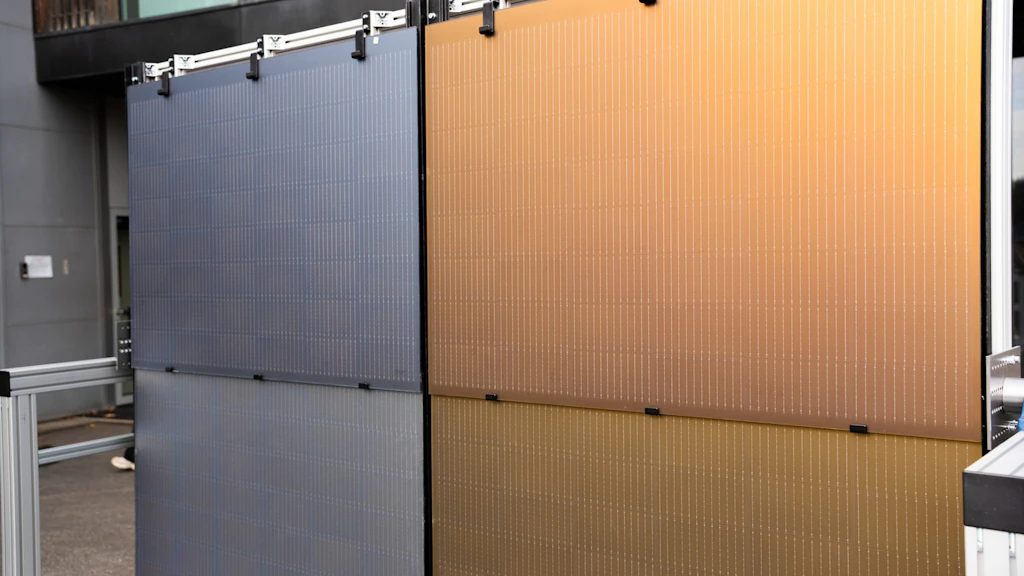
It is with that perspective that 3S Swiss Solar Solutions launched the innovation project supported by Innosuisse “Chameleon”, with the aim of taking this approach one step further: developing coloured photovoltaic modules that are efficient, durable and suitable for consistent, high-quality series production.
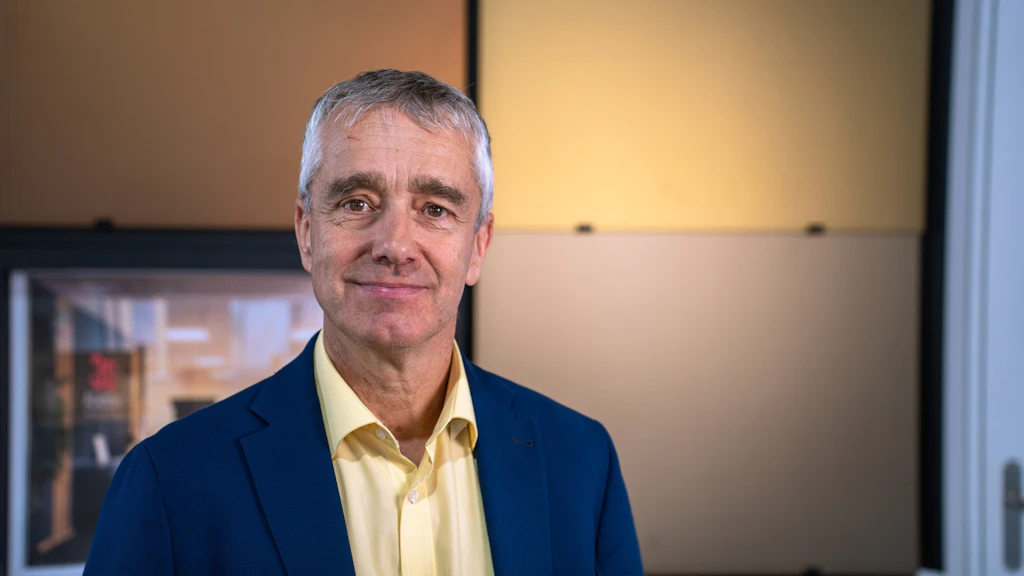
Rather than being merely added to a building, the modules themselves become architectural elements, with colours and appearances that can be adapted to suit the building's design. In short, the panels become true chameleons. “At 3S, we transform buildings into sources of energy,” explains Patrick Hofer-Noser, founder and CEO of the company.
Bringing colours to solar energy
Coloured photovoltaic modules existed prior to the Chameleon project. The challenge was to reconcile their appearance with their primary function of generating electricity. Solar cells need to absorb as much light as possible. However, when a coloured layer is placed in front of it, part of that light is reflected or absorbed, which can reduce the module’s performance. Therefore, depending on the technology used, this loss has to be kept under control.
“Colours have been used in solar technology for a long time. The question was: how can we produce them in an automated and durable way?” explains Patrick Hofer-Noser.
To address this challenge, four elements had to be brought together: colour selection, energy performance, durability and large-scale manufacturing.
From research to production
This is why 3S Swiss Solar Solutions worked with CSEM and EPFL as part of an innovation project supported by Innosuisse.
The project partners investigated two ways of integrating colour into the modules: digitally printing a ceramic layer onto the glass in front of the cells, and using coloured films inside the module. They then analysed the effect of these solutions on the colour, light transmission, module output and resistance to ageing.
They also worked on the connections between the cells to make the metallic elements less visible and improve module performance. The aim was to design panels that would no longer be perceived as technical equipment added to a building, but as genuine construction materials.
Consistent colour on a large scale
Producing one coloured photovoltaic module is one thing. Manufacturing hundreds of them with a consistent colour and stable performance is another. On a large façade, even a slight colour difference between two modules can be clearly visible.
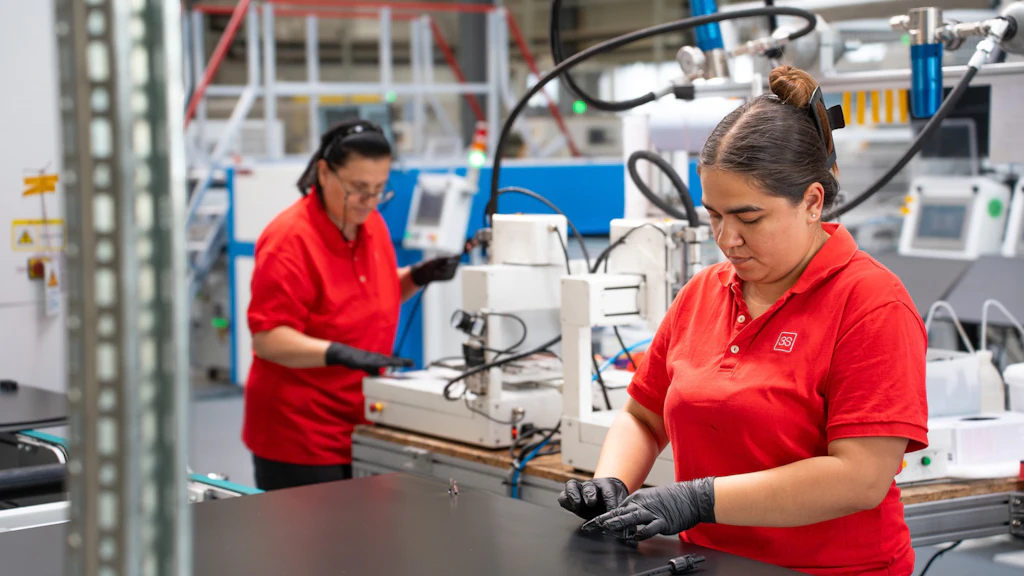
To move from prototype to series production, the partners combined their expertise. 3S Swiss Solar Solutions contributed its experience in industrial manufacturing, while CSEM focused in particular on materials, colouring and measurement methods. EPFL contributed its expertise in solar cells, their reliability and ageing.
Together, they developed new methods for controlling colour and colour consistency, as well as the electrical properties and quality of the materials used in the modules. They also carried out accelerated ageing tests to assess how well the colours and performance would hold up over time. Ultimately, these advances made it possible to manufacture photovoltaic modules in different colours on a large scale while maintaining consistent quality.
A bridge between research and industry
For an SME, developing new materials and adapting production processes represents a significant investment. It requires specialised scientific expertise, extensive testing and time before a solution can be brought to market.
Support from Innosuisse enabled 3S Swiss Solar Solutions to combine its industrial experience with the expertise of its research partners. “Innosuisse plays a pivotal role between industry, SMEs and academia. It helps us accelerate the transfer,” says Patrick Hofer-Noser, encouraging other Swiss SMEs to innovate and, like a chameleon, adapt to a constantly evolving environment.
About the company:
Founded in 2001, 3S specialises in building-integrated photovoltaic systems. The company is one of Switzerland’s leading manufacturers of building-integrated solar systems. With its innovative systems, digital tools and sustainable vision, 3S combines energy, performance and design with the aim of driving the energy transition forward.
The project in short: